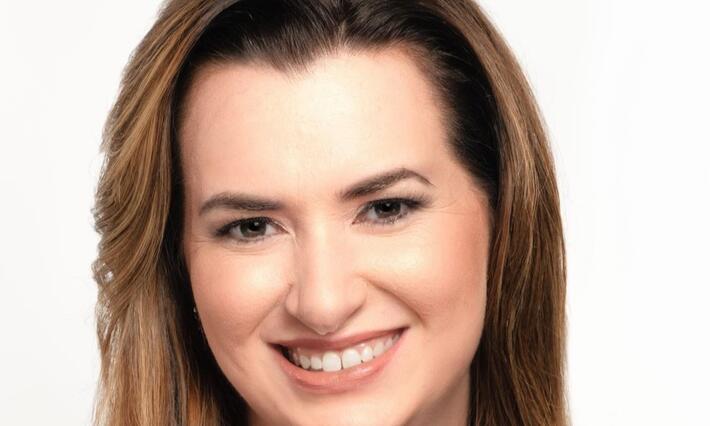
In December 2023 and January 2024 Duke Cancer Institute senior leaders surprised three deserving recipients with the coveted DCI Superstar Award in recognition of their achievements and exceptional service in going above and beyond in their work.
DCI Executive Director Michael B. Kastan, MD, PhD, and DCI Chief Administrator Robin Famiglietti, PhD, MBA, FACHE, arrived at the three DCI cancer centers with bright gold and shiny black balloons, glittering confetti, “You’re a Superstar” water bottles, and personalized cakes to celebrate the awardees. They read excerpts from the nomination letters and presented each awardee with a special crystal award engraved with their name.
Family members of the honorees were invited to join the celebration; being careful not to reveal the news before the big moment. Managers and colleagues, including nominators, arrived to show their support for their teammates.
Anita Fernandez, CMA Certified Medical Assistant II Duke Cancer Center North Durham
Certified Medical Assistant Anita Fernandez, CMA, poses with her colleagues after receiving her 2023 DCI Superstar Achievement Award.
Executive Director of DCI Michael Kastan, MD, PhD, and Chief Administrator of DCI Robin Famiglietti, PhD, MBA, FACHE, present a 2023 DCI Superstar Achievement Award to a very surprised Anita Fernandez, CMA, who was also joined by her family.
Supervisor: Jana Linsenmeyer, BSN, RN, CMSRN, CNML, Nurse Manager of Operations, Duke Cancer Center North Durham
Anita’s nominators describe her as: patient, professional, compassionate, dedicated, mindful, calming, diligent, thorough, modest, helpful, knowledgeable, hardworking, so smart, a self-starter, caring
"
Anita is one of those people who truly is mindful of all the patients in her care. She knows them and can recognize subtle changes in them both physically and emotionally. She has a calming effect on people and is a diligent worker. She is driven to ensure our MD schedules are on time, ensures we all know who is where and doing what, and is an excellent phlebotomist. Basically she keeps the wheels on the bus moving forward at all times. Patients ask for her by name, and she always makes sure they get what they need during the visit. She is a self-starter and always strives to do everything thoroughly. She is a valued asset to our clinic, and we are lucky to have her. Anita is very modest and never recognizes the impact she has on our entire office. She never minds going out of her way to help others.
"
Nicki Coates, RN, OCN
/
Clinical Nurse III, Medical Oncology
"
Anita is such a crucial part of keeping our clinic running. She is knowledgeable, hardworking, and so smart. It is a pleasure to work with her and our patients are better off for having Anita as part of their care team. It is amazing to watch her work, and how she is able to keep the team on track. Anita is a large part of what makes the work culture at our cancer center so strong. I hope we are able to work with her for a long time and I have no doubt that she will continue to make a difference in the lives of those in her orbit. I have nominated her to be our DCI Superstar because I would love to see her have this extra piece of recognition.
"
Jana Linsenmeyer, BSN, RN, CMSRN, CNML
/
Nurse Manager of Operations, Duke Cancer Center North Durham
In addition to her own nomination letter, Linsenmeyer recounted the experience of a grateful patient with her submission.
“This patient asked to speak to the nurse manager. When the manager approached the patient, she was gushing over the care she received at Duke Regional Hospital. She particularly wanted to thank Anita for her patience, care, and professionalism. The patient admitted she has "difficult" veins and said she was impressed by the compassion of the nurses and CMAs to draw her blood and educate her. She said she wouldn't imagine being treated anywhere else,” wrote Linsenmeyer. “Hearing these things do not surprise me as the manager, because I see this level of dedication and heart in our team every single day. Anita is one of the members of this incredible team and makes us all better (for) getting to work with her.”
Meg Helsley, MSN, APRN, AOCNS Clinical Nurse Specialist Duke Cancer Center
Clinical Nurse Specialist Meg Helsley, MSN, APRN, AOCNS, gets a hug from DCI Chief Administrator Robin Famiglietti, PhD, MBA, FACHE, after receiving her 2023 DCI Superstar Achievement Award. At left, Meg's husband, holding a bouquet, Meg's supervisor Kelli Van Wagner, MN, RN, OCN (Clinical Operations Director, Duke Cancer Center), and Executive Director of DCI Michael Kastan, MD, PhD.
Executive Director of DCI Michael Kastan, MD, PhD, and Chief Administrator of DCI Robin Famiglietti, PhD, MBA, FACHE, present Clinical Nurse Specialist Meg Helsley MSN, APRN, AOCNS (center) with a 2023 DCI Superstar Achievement Award.
Supervisor: Kelli Van Wagner, MN, RN, OCN (Clinical Operations Director, Duke Cancer Center)
Meg’s nominators describe her as: a quiet force, dedicated, a teacher, a mentor, kind, calm, professional, supportive, helpful, patient, hard-working, persistent, organized, committed, dedicated, engaged, innovative
"
Meg embodies everything that is a superstar. She is a quiet force who always looks for a way to improve processes for patients, staff, and her peers. She has dedicated an enormous effort to improve the patient experience, whether she is advocating for and communicating new processes to all impacted healthcareis teams, improving questionnaires for patients, teaching and mentoring new nurses, or … ensuring that the Cold Cap Therapy program is operating smoothly. In addition to embodying professionalism, she is kind and calm as a work partner and is always there to support someone in need.
I see Meg go above and beyond for our patients every single day. From making personal phone calls to patients to understand their experience and help them 1:1, to escalating issues that may impact others on a system level even if that means more time and effort to do so. To say Meg gives 110% to everything she does is an understatement and despite her workload, she’ll be the first to offer help when a colleague is struggling. She does all of this with grace and patience and truly deserves this recognition.
"
Michelle Olson, MPH
/
Manager, Patient Education
"
When I joined DCI as a newly graduated clinical nurse specialist, Meg had an orientation plan that would both validate my (professional) competency and set me up for success with the organization… Meg was (and remains) my sounding board for practical questions, navigating difficult communication, and the insecurities that come with new graduate practice. While my orientation is such a small snippet of Meg’s superstar work, I think that it exemplifies her excellence at mentoring and standardization of practice.
"
Jennifer Frith, MSN, RN, OCN, NE-BC
/
Clinical Operations Director, Inpatient Oncology and Blood Cancer Center
"
During the recent internal audit of our cold cap therapy process, Meg was instrumental in helping close many loops and creating processes for the program… Her hard work and persistence allowed us to achieve success… Meg has also been a great resource… in rolling out the updated distress screening tool. She always makes time for questions, is thoughtful in her responses, and ensures we always incorporate feedback from frontline staff… Meg has been the constant force in ensuring our breast health questionnaire has life! … Without Meg’s dedication, this would not have come to fruition… Meg is the chair of our Head and Neck Oncology Care Continuum Task Force Committee. Her leadership on this committee has been critically important to the continued efforts to streamline care coordination and improve patient education and patient experience in Durham and Raleigh. She pulled together a multi-disciplinary workgroup with reps from inpatient and outpatient teams and effectively broke down silos…we’ve seen a lot of innovation and improvement out of this committee, and Meg has been the lynchpin pulling us all together…Meg has also been instrumental in helping get the RN Coordinator role up and running…She follows through on her commitments and is such a great person to work with! She truly embodies our Duke values of Teamwork and Excellence in all that she does, the Duke Cancer Institute is lucky to have her.
"
Jennifer Frith, MSN, RN, OCN, NE-BC
/
Clinical Operations Director, Inpatient Oncology and Blood Cancer Center
In 2021, Helsley received the Edward & Florence O’Keefe Award for Excellence in Oncology Nursing Practice from the Duke Friends of Nursing for her innovation, teamwork, and patient care. (Hear from Meg in this video.)
Kaynisha "Renee" Martin, CMA Certified Medical Assistant Duke Cancer Center Raleigh
Certified Medical Assistant Renee Martin, CMA (center) — holding two bouquets and her 2023 DCI Superstar Achievement Award — joins her colleagues for a group photo following the ceremony.
Executive Director of DCI Michael Kastan, MD, PhD, and DCI Chief Administrator Robin Famiglietti, PhD, MBA, FACHE, present Renee Martin (center) her 2023 DCI Superstar Achievement Award.
Renee’s nominators describe her as: brilliant, smart, efficient, dedicated, committed, polite, kind, supportive, proactive, empathetic, welcoming, alleviates stress, extra care, compassionate, kindhearted
"
Renee has an outstanding dedication to patient care and exceptional teamwork. Her commitment to going above and beyond for the patients, as well as her willingness to assist coworkers, truly showcases her remarkable qualities. Renee has a patient-centered focus and an ability to handle busy times with politeness and kindness. She displays her dedication to medicine not only in her current role as a Certified Medical Assistant but also in her future aspirations of becoming a Physician Assistant. Renee consistently prioritizes patient comfort and convenience while also supporting her coworkers. Her proactive attitude in taking on tasks without being asked, such as drawing labs for the phlebotomist when they are delayed, showcases her dedication to ensuring smooth and efficient patient care. Additionally, her commitment to rounding on hospitalized patients during her administrative day demonstrates her willingness to go the extra mile to provide comprehensive and personalized care. By actively addressing patient discomfort and placing them in a private room for added comfort in their current situation, she shows empathy and a patient-centered approach. She consistently provides a positive workplace environment and welcomes new team members with a smile. Her actions not only alleviate stress for her coworkers but also enhance patient satisfaction and overall outcomes.
She always goes above and beyond in her job, providing extra care and compassion and helping patients and co-workers. She is brilliant, smart and efficient. It's such a pleasure to work with her and all the patients adore her! Patients truly appreciate her compassion and kind heart. We hear great feedback about her from patients all the time!
Multiple myeloma remains one of the most challenging hematologic malignancies to treat. Despite advances in therapy, many patients eventually relapse or develop resistance to standard treatments.A team led by Mikhail Nikiforov, PhD, professor in the Duke University School of Medicine Department of Pathology and Biomedical Engineering, and Duke Cancer Institute member, is uncovering a promising new approach that could reshape the therapeutic landscape.Multiple myeloma is characterized by uncontrolled proliferation of plasma cells, which produce large amounts of dysfunctional antibodies. These abnormal proteins can damage organs such as the kidneys and weaken bones, leading to pain and fractures.The disease environment in the bone marrow is rich in iron, a nutrient essential for cell growth and DNA synthesis. Cancer cells exploit this iron abundance to fuel their rapid proliferation.However, excess iron can also trigger a unique form of cell death called ferroptosis, driven by oxidative damage to cell membranes.“Ferroptosis is a programmed death caused by iron-dependent lipid peroxidation, and it’s particularly relevant in iron-loaded environments like the bone marrow,” Nikiforov said.Nikiforov’s team focused on why some myeloma cells resist ferroptosis. Using genetic screening, they identified a kinase called STK17B as a key player. High levels of STK17B not only suppress ferroptosis but also correlate with poor patient survival and resistance to bortezomib, a cornerstone drug in myeloma therapy.“This kinase appears to help cancer cells maintain iron balance and avoid ferroptotic death,” Nikiforov said. “When we inhibit STK17B, iron overload tips the scale, and the cells die.”The team collaborated with Timothy Willson, PhD, Harold Kohn distinguished professor in open science drug discovery at the University of North Carolina Eshelman School of Pharmacy, who had previously developed an STK17B inhibitor. Using an improved formulation, they tested the compound in two myeloma models and observed significant efficacy.The findings were strong enough to warrant a provisional patent and open the door for future drug development. Currently, no FDA-approved therapies specifically induce ferroptosis.“Our work suggests a new therapeutic angle—targeting iron addiction in cancer cells,” Nikiforov said. “It could complement existing treatments and potentially apply to other iron-rich tumors.”Future research will explore combination strategies with standard therapies and immune-based approaches, as well as whether ferroptosis-targeting drugs could benefit other cancer treatments. The team is also investigating what regulates STK17B activity, aiming to uncover additional intervention points.“We’re excited about the possibilities,” Nikiforov said. “It’s early, but the data are compelling.”