Avery Cooper, now 15, with her mom, Liz, and sister Anabel. Though Avery and Anabel are 3 years apart in age and have almost opposite personalities, they are as close as twins, Liz says. Avery was diagnosed with a brain tumor in 2018 and has been in remission since May 2019.
Being a Teen After Cancer
Published
From the Duke Cancer Institute archives. Content may be out of date.
In December 2018, at just 13 years old, Avery Cooper had to spend her holidays staying at Duke University Hospital. After a brain tumor diagnosis in June 2018, she went through two surgeries at Duke and proton beam radiation therapy at another center. She endured infections and hydrocephalus (buildup of fluid on the brain).
None of this was normal for a young teen whose main concerns should be soccer games and sleepovers. But that was the reality for Avery.
After she was done with the surgeries and hospital stays, Avery started chemotherapy.
In the midst of that, she started meeting with Geoffrey Vaughn, LMFT, ATR. Vaughn is a medical family therapist with Duke Cancer Institute and part of Duke’s Teen and Young Adult Oncology (TYAO) program. The program provides teen and young adult cancer patients (ages 15-29) with support and community before, during, and after treatment.
Because of their schedules, Vaughn and Avery had their first meeting in the hospital cafeteria. She was still receiving chemotherapy, and it had upset her stomach. As soon as he sat down, Avery had to turn away to get sick. “Geoff just waited for her,” says Avery’s mom, Liz Cooper. “He took it in stride.”
Avery and Vaughn really began working together after she completed treatment.
“When you leave the last treatment appointment, it feels like you were dropped off on a dark street corner and you don’t know where you are,” Liz says. The flurry of frequent appointments was over. And Avery couldn’t do any of the sports that she loved before, like kickboxing and soccer. “It was a big blow to go from playing soccer to not being able to run at all,” Liz says. “I could be her mom, but I couldn’t fix any of it.”
Vaughn meets with Avery for individual therapy once a week. They have talked about ways she can make friends even though she is homeschooled, for instance. “Avery wouldn’t be as far along as she is today if it weren’t for Geoff,” Liz says. “They had an immediate connection. It just worked.”
A different family therapist also meets periodically with the entire family, including Avery’s sister, Anabel. Though almost 3 years apart in age, the sisters are as close as twins. When Avery had to spend Christmas in the hospital, the family got special permission for Anabel to spend the night there with her. Though so close, the sisters are very different, Liz says. Anabel is outgoing, light-hearted, and an early riser, while Avery is introverted, a daydreamer, and a night owl. Liz calls Anabel the sun, and Avery, the moon.
In May 2019, Avery’s cancer went into remission. Liz Cooper says she is grateful to Avery’s entire neuro-oncology team and psychology team: Daniel Landi, MD; Julianne Rogers, RN, CPN; Sarah Davis, LCSW; and Bridgett Archambault, MSN, CPNP.
By early 2020, Avery was on an upswing, Liz says. She had taken up swimming and felt optimistic. But the COVID-19 pandemic has made things harder for her. She stopped the swim team because of concerns about COVID-19 risk. And her therapy sessions with Vaughn are by phone now, which has its challenges compared to in-person therapy.
Still, Liz describes Vaughn as “a lifesaver.” And Avery is working with him to make the most of age 15. Avery says about Vaughn: “Geoff helps me feel more normal about my emotions and who I am now, after cancer. He's comforting and calm and helps me work through my feelings in a positive way.”
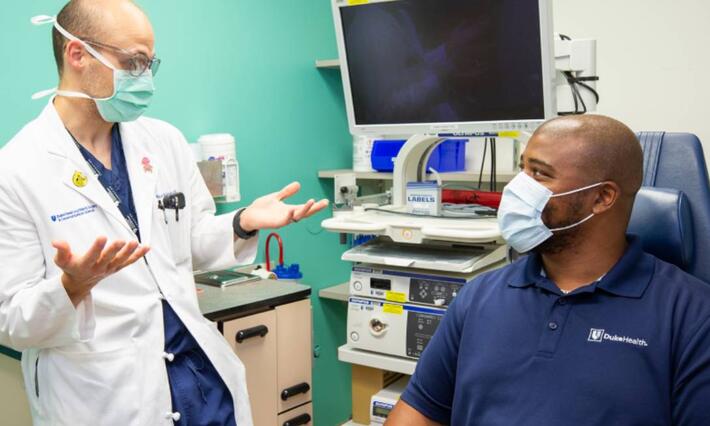
For decades, cancer screening has focused on detecting one cancer at a time through tests such as mammograms, colonoscopies, cervical cancer screenings, and lung cancer screening. While these tests save lives, many cancers still lack recommended screening options and often are not detected until symptoms develop.One of the greatest challenges in cancer care is that many cancers are discovered after they have progressed to more advanced stages. At that point, treatment can be more intensive and outcomes may be less favorable.Multi-cancer early detection (MCED) tests represent a new approach that could change that. MCED tests are blood tests designed to look for signals associated with multiple types of cancer at the same time. Rather than focusing on a single disease, these tests analyze fragments of genetic material and other biomarkers that circulate in the bloodstream. If an abnormal pattern is detected, the test may identify a potential cancer signal and, in some cases, suggest where in the body that signal originated.“MCED testing may help identify certain cancers before symptoms appear, creating opportunities for earlier evaluation and treatment,” said Kevin Oeffinger, MD, director of the Duke Cancer Institute (DCI) Center for Onco-Primary Care and co-director of the Supportive Care and Survivorship Center.Researchers and clinicians are particularly interested in the potential of MCED tests to help detect cancers that currently have no routine screening recommendations. MCED testing may offer another tool for finding some of these cancers earlier.Although MCED testing holds considerable promise, experts emphasize that patients and healthcare providers should understand both its advantages and its current limitations.MCED testing may be most appropriate for adults age 50 and older, as cancer risk increases with age. It may also be considered for younger individuals who have a higher risk of cancer because of factors such as family history, a personal history of cancer, lifestyle factors, or certain medical conditions.Importantly, MCED tests do not diagnose cancer. A positive result signals the need for additional testing to determine whether cancer is present and, if so, what type of cancer it may be.Like all screening tools, MCED tests have limitations. False-positive results can occur, meaning a cancer signal is detected when no cancer is present. False-negative results are also possible, as some cancers may not release detectable signals into the bloodstream.Experts also stress that MCED testing is not a replacement for recommended cancer screenings.“Patients should continue to receive all age- and risk-appropriate screenings, including mammograms, colonoscopies, cervical cancer screening, prostate cancer screening, and lung cancer screening,” Oeffinger said.Currently, MCED tests have not received FDA approval and are available as laboratory-developed tests while additional research continues. While many healthcare organizations can order an MCED test, the Duke Center for Onco-Primary Care offers a dedicated MCED clinic that begins with an individualized discussion about a patient's health history, cancer risk factors, and screening goals.Patients receive education and counseling before testing, assistance with coordinating the test itself, support in understanding results, and guidance through any recommended follow-up evaluations. Rather than leaving patients to interpret complex information on their own, Duke provides coordinated care throughout the testing and diagnostic pathway.As research continues, Duke's experts believe MCED testing has the potential to become an important addition to cancer screening strategies.“Duke's approach ensures patients have access to expert guidance, evidence-based recommendations, and coordinated care every step of the way,” Oeffinger said.To learn more about the MCED Clinic or to make an appointment, visit dukehealth.org/mced-test, or call 919-613-3333.
For decades, cancer screening has focused on detecting one cancer at a time through tests such as mammograms, colonoscopies, cervical cancer screenings, and lung cancer screening. While these tests save lives, many cancers still lack recommended screening options and often are not detected until symptoms develop.One of the greatest challenges in cancer care is that many cancers are discovered after they have progressed to more advanced stages. At that point, treatment can be more intensive and outcomes may be less favorable.Multi-cancer early detection (MCED) tests represent a new approach that could change that. MCED tests are blood tests designed to look for signals associated with multiple types of cancer at the same time. Rather than focusing on a single disease, these tests analyze fragments of genetic material and other biomarkers that circulate in the bloodstream. If an abnormal pattern is detected, the test may identify a potential cancer signal and, in some cases, suggest where in the body that signal originated.“MCED testing may help identify certain cancers before symptoms appear, creating opportunities for earlier evaluation and treatment,” said Kevin Oeffinger, MD, director of the Duke Cancer Institute (DCI) Center for Onco-Primary Care and co-director of the Supportive Care and Survivorship Center.Researchers and clinicians are particularly interested in the potential of MCED tests to help detect cancers that currently have no routine screening recommendations. MCED testing may offer another tool for finding some of these cancers earlier.Although MCED testing holds considerable promise, experts emphasize that patients and healthcare providers should understand both its advantages and its current limitations.MCED testing may be most appropriate for adults age 50 and older, as cancer risk increases with age. It may also be considered for younger individuals who have a higher risk of cancer because of factors such as family history, a personal history of cancer, lifestyle factors, or certain medical conditions.Importantly, MCED tests do not diagnose cancer. A positive result signals the need for additional testing to determine whether cancer is present and, if so, what type of cancer it may be.Like all screening tools, MCED tests have limitations. False-positive results can occur, meaning a cancer signal is detected when no cancer is present. False-negative results are also possible, as some cancers may not release detectable signals into the bloodstream.Experts also stress that MCED testing is not a replacement for recommended cancer screenings.“Patients should continue to receive all age- and risk-appropriate screenings, including mammograms, colonoscopies, cervical cancer screening, prostate cancer screening, and lung cancer screening,” Oeffinger said.Currently, MCED tests have not received FDA approval and are available as laboratory-developed tests while additional research continues. While many healthcare organizations can order an MCED test, the Duke Center for Onco-Primary Care offers a dedicated MCED clinic that begins with an individualized discussion about a patient's health history, cancer risk factors, and screening goals.Patients receive education and counseling before testing, assistance with coordinating the test itself, support in understanding results, and guidance through any recommended follow-up evaluations. Rather than leaving patients to interpret complex information on their own, Duke provides coordinated care throughout the testing and diagnostic pathway.As research continues, Duke's experts believe MCED testing has the potential to become an important addition to cancer screening strategies.“Duke's approach ensures patients have access to expert guidance, evidence-based recommendations, and coordinated care every step of the way,” Oeffinger said.To learn more about the MCED Clinic or to make an appointment, visit dukehealth.org/mced-test, or call 919-613-3333.