From the Duke Cancer Institute archives. Content may be out of date.
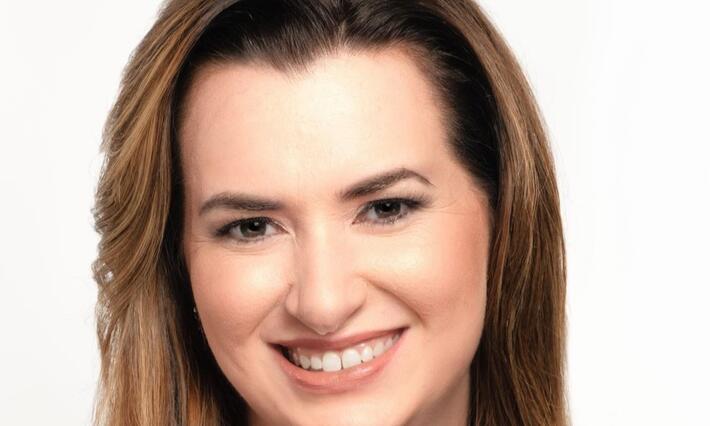
When Alexa Balthazar was diagnosed with leukemia at age 28, she ultimately needed a bone marrow transplant. Knowing that her transplant physician, Mitchell Horwitz, MD, had a plan was very encouraging, but she still faced a whirlwind of emotions. Teen and Young Adult Oncology Program nurse navigator Jackie Balliot, BSN, RN, OCN, was there to help. She made several referrals, including connecting Alexa to medical family therapist Geoffrey Vaughn, LMFT, ATR.
“What you go through is traumatic, and to be able to talk with someone who is not a family member or friend about very serious topics was helpful for me,” Balthazar said. In May 2023, she celebrated her one-year transplant birthday.
The generosity of donors and friends like you makes it possible for Duke Cancer Institute (DCI) to discover, develop, and deliver the future of cancer care…now. Because of you, DCI stands among the nation’s premier cancer centers, driving innovation and transforming lives.After more than a decade as DCI’s inaugural executive director, Michael B. Kastan, MD, PhD, has decided it is time to pass the torch. Since 2011, he transformed DCI into a national model, championing multidisciplinary care, expanding research, and improving access and community engagement. A pediatric hematologist-oncologist and renowned cancer biologist, Kastan will continue as a Duke faculty member.On January 5, 2026, we welcomed Erik Sulman, MD, PhD, as interim executive director. Recently appointed chair of the Department of Radiation Oncology, Sulman brings exceptional expertise in brain tumor treatment and novel therapies. We are confident his leadership will guide DCI through this transition and build on its legacy of excellence.Thank you for all you do to elevate DCI’s mission. Together, we are changing the future of cancer care. The stories below highlight just a few examples of how we’re doing that.This message was originally published in the 2026 Breakthroughs. Read more about DCI's breakthrough research and patient care in this annual magazine.
Arlene Brown knew she was at high risk for breast cancer and stayed vigilant with regular screenings. But nothing could prepare her for the moment she found a lump — while 18 weeks pregnant with her first child.What followed was a whirlwind of decisions, fears, and a treatment journey that would test her strength and reshape her future.Brown was named after her Aunt Arlene, who died from triple-negative breast cancer. After Brown’s sister was diagnosed with the same cancer, Brown underwent genetic testing. It revealed that Brown had the BRCA-1 gene mutation, which elevated her risk for breast and ovarian cancer.Her doctors suggested she undergo a bilateral mastectomy to remove her breasts and an oophorectomy to remove her ovaries. But Brown was 33, and she and her husband, Richard, wanted to start their family.Instead, she opted for regularly scheduled mammograms and MRIs. The results came back clear, and in December of 2022, the Raleigh, North Carolina, philanthropy officer was thrilled to learn she was pregnant.In March, after she felt a lump under her right arm during a shower, her doctor advised that lumps and bumps during pregnancy were common. In May, however, Brown had an ultrasound, then a biopsy. Like her family members, Brown was diagnosed with triple-negative breast cancer.
The generosity of donors and friends like you makes it possible for Duke Cancer Institute (DCI) to discover, develop, and deliver the future of cancer care…now. Because of you, DCI stands among the nation’s premier cancer centers, driving innovation and transforming lives.After more than a decade as DCI’s inaugural executive director, Michael B. Kastan, MD, PhD, has decided it is time to pass the torch. Since 2011, he transformed DCI into a national model, championing multidisciplinary care, expanding research, and improving access and community engagement. A pediatric hematologist-oncologist and renowned cancer biologist, Kastan will continue as a Duke faculty member.On January 5, 2026, we welcomed Erik Sulman, MD, PhD, as interim executive director. Recently appointed chair of the Department of Radiation Oncology, Sulman brings exceptional expertise in brain tumor treatment and novel therapies. We are confident his leadership will guide DCI through this transition and build on its legacy of excellence.Thank you for all you do to elevate DCI’s mission. Together, we are changing the future of cancer care. The stories below highlight just a few examples of how we’re doing that.This message was originally published in the 2026 Breakthroughs. Read more about DCI's breakthrough research and patient care in this annual magazine.
Arlene Brown knew she was at high risk for breast cancer and stayed vigilant with regular screenings. But nothing could prepare her for the moment she found a lump — while 18 weeks pregnant with her first child.What followed was a whirlwind of decisions, fears, and a treatment journey that would test her strength and reshape her future.Brown was named after her Aunt Arlene, who died from triple-negative breast cancer. After Brown’s sister was diagnosed with the same cancer, Brown underwent genetic testing. It revealed that Brown had the BRCA-1 gene mutation, which elevated her risk for breast and ovarian cancer.Her doctors suggested she undergo a bilateral mastectomy to remove her breasts and an oophorectomy to remove her ovaries. But Brown was 33, and she and her husband, Richard, wanted to start their family.Instead, she opted for regularly scheduled mammograms and MRIs. The results came back clear, and in December of 2022, the Raleigh, North Carolina, philanthropy officer was thrilled to learn she was pregnant.In March, after she felt a lump under her right arm during a shower, her doctor advised that lumps and bumps during pregnancy were common. In May, however, Brown had an ultrasound, then a biopsy. Like her family members, Brown was diagnosed with triple-negative breast cancer.